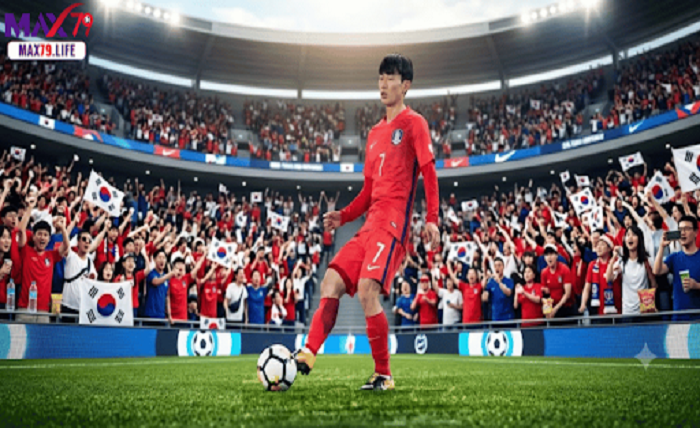
Why do football scouts and tactical analysts consistently point toward the right-back position as the most demanding role in the modern era? The career of Kim Moon-hwan provides a comprehensive answer, showcasing a blend of stamina, tactical intelligence, and technical proficiency. In the early stages of his development, observers noted his transition from an attacking winger to a defensive stalwart, a shift that mirrored the growing demands of professional leagues where max79 performance levels are required every single match day. This transition was not merely about changing positions but involved a complete overhaul of his spatial awareness and defensive timing. For those who follow the K-League or the Korean national team, the rise of this athlete represents a broader trend of technical players moving deeper into the formation to influence the game from the back. A significant portion of his success can be attributed to his ability to read the game before the ball even reaches his zone, ensuring he remains one step ahead of the opposition’s fastest wingers. When users seek reliable data or access to sports analysis, they often access their MAX79 account to find the most up-to-date statistics on players who maintain such high levels of consistency throughout a grueling season.
Tactical Versatility in the Kim Moon-hwan Playbook
One thing very few actually pay attention to is how a player’s collegiate background influences their professional longevity and tactical flexibility. Kim Moon-hwan honed his skills within the rigorous South Korean university system, a path that emphasizes physical conditioning and disciplined teamwork above all else. This foundation allowed him to enter the professional ranks with a maturity that is often lacking in younger prospects who bypass such structured environments. Beyond that, his time at Busan IPark served as a critical proving ground where he could test his offensive instincts against seasoned defensive blocks. Notable for his overlapping runs, he became a primary source of width for his team, often forcing opposing midfielders to drop deeper and vacate central spaces. This specific brand of playmaking from the flanks is what eventually caught the eye of international scouts and national team coaches alike.
In addition, his movement off the ball creates a ripple effect throughout the entire team structure. By occupying high positions on the right touchline, he allows the central midfielders to operate with more freedom, knowing that the width is consistently provided. Another key aspect of his game is his recovery speed, which acts as a safety net for his center-backs when the team loses possession during an attacking transition. For those who analyze high-level matches, it becomes clear that his presence on the field changes the mathematical probabilities of a successful counter-attack by the opponent. His ability to sprint back and recover his position within seconds is a testament to the elite level of fitness he maintains year-round.
Defensive Mechanics and One-on-One Dominance
The technical nuances of his defensive stance are often studied by youth academies looking to produce the next generation of reliable full-backs. Kim Moon-hwan utilizes a low center of gravity and quick lateral movement to mirror the steps of the most agile attackers in the league. Notably, he rarely commits to a tackle too early, preferring to shepherd the winger into less dangerous areas of the pitch or toward his supporting teammates. This patient approach to defending has significantly reduced the number of fouls he concedes in dangerous areas near the penalty box. Furthermore, his aerial ability, despite not being the tallest player on the pitch, remains surprisingly effective due to his excellent vertical leap and timing.
Transitioning from Defense to Offensive Catalyst
When the ball is won back in the defensive third, the first look from the goalkeeper or central defenders is often toward the right flank. Kim Moon-hwan possesses the vision to execute long-range diagonal passes that can switch the point of attack in an instant. This specific skill set makes him more than just a defender; he acts as a secondary playmaker who can bypass the opponent’s first line of pressing with a single touch. His crossing technique is also highly specialized, favoring low, driven balls that are difficult for defenders to clear while being easy for strikers to redirect toward the goal. This dual-threat capability makes him an indispensable asset for any manager looking to implement a modern, high-pressing system.
International Impact of the Kim Moon-hwan Era
A significant portion of his legacy is defined by his contributions to the South Korean national team during major international tournaments. Representing one’s country requires a level of mental fortitude that transcends club-level pressure, and he has consistently risen to the occasion. Whether competing in the Asian Cup or on the world stage, his performance levels have remained remarkably stable, providing a sense of security for the coaching staff. Beyond that, his experience playing in different leagues, including his stint in Major League Soccer with Los Angeles FC, has broadened his tactical horizons. This exposure to different styles of play—ranging from the physical intensity of North American soccer to the technical precision of Asian leagues—has molded him into a truly global footballer.
One thing very few actually pay attention to is the cultural impact he has had on aspiring young players in Korea. By succeeding in diverse environments, he has proven that technical skill and a strong work ethic can overcome the challenges of adapting to new languages and playing philosophies. Notably, his return to the K-League with Jeonbuk Hyundai Motors further solidified his status as a premier domestic talent capable of leading a championship-caliber squad. His leadership on and off the field is frequently cited by teammates as a driving factor in the locker room, especially during the high-pressure periods of the domestic season. For fans who want to track every minute of his performance, they frequently enter the MAX79 portal to stay connected with the latest match reports and player ratings.
Adapting to the Physicality of Major League Soccer
The move to Los Angeles was a pivotal moment in his career that tested his ability to handle a more transition-based and physically demanding style of play. In the United States, the emphasis on raw speed and individual athleticism forced Kim Moon-hwan to refine his positioning even further. He had to learn how to manage space against players who possessed elite-level sprinting capabilities, which sharpened his defensive instincts. This period of his career was instrumental in developing the physical resilience required to compete at the highest levels of the sport without succumbing to fatigue or injury.
Tactical Integration at Jeonbuk Hyundai Motors
Upon returning to the domestic league, he integrated seamlessly into a system that demanded high levels of ball possession and territorial dominance. At Jeonbuk, he was often asked to play as an inverted full-back, moving into central midfield positions during the buildup phase to create numerical superiorities. This role requires a high degree of technical security, as losing the ball in the center of the pitch can lead to immediate danger. His success in this sophisticated role demonstrated his high footballing IQ and his capacity to evolve even as a veteran of the game.
The Enduring Professionalism of Kim Moon-hwan
For those who follow the daily routines of elite athletes, the longevity of a player like this is no accident. It is the result of meticulous attention to detail regarding nutrition, recovery, and psychological preparation. In addition, his ability to maintain a high level of performance across different continents and tactical systems is a rare feat in professional football. Another key aspect of his career is his humility; despite his success, he remains a dedicated team player who prioritizes the collective objective over individual accolades. This mindset is exactly what coaches look for when building a squad capable of winning multiple trophies over several seasons.
The journey of Kim Moon-hwan serves as a blueprint for how a modern athlete should manage their career in an increasingly globalized sports market. From the university fields to the bright lights of international stadiums, he has remained focused on continuous improvement. Notably, his story is far from over, as he continues to be a vital component of both his club and national teams. As the game continues to evolve, players who can offer the same level of versatility and reliability will always be in high demand. For enthusiasts who follow these developments closely, the ability to sign into MAX79 provides the necessary portal to engage with the deep analytics and historical data of such distinguished careers.
Final
Reviewing his total influence, the impact of Kim Moon-hwan on the pitch is measured not just in goals or assists, but in the structural stability he provides to his team. His career highlights the importance of the full-back in the contemporary game, where the line between defender and attacker is increasingly blurred. As he continues to compete at the highest level, his influence will likely inspire a new generation of players to embrace the complexities of his position. To keep up with his latest achievements and access exclusive insights into his training and match-day statistics, make sure to log in to MAX79 today. Register your account to explore the full spectrum of professional football analysis and stay ahead of every tactical trend in the sport. Register at all that awaits at đăng nhập max79 to access exclusive tables and a secure gaming environment.